
THC vs. CBD – The Biological Difference
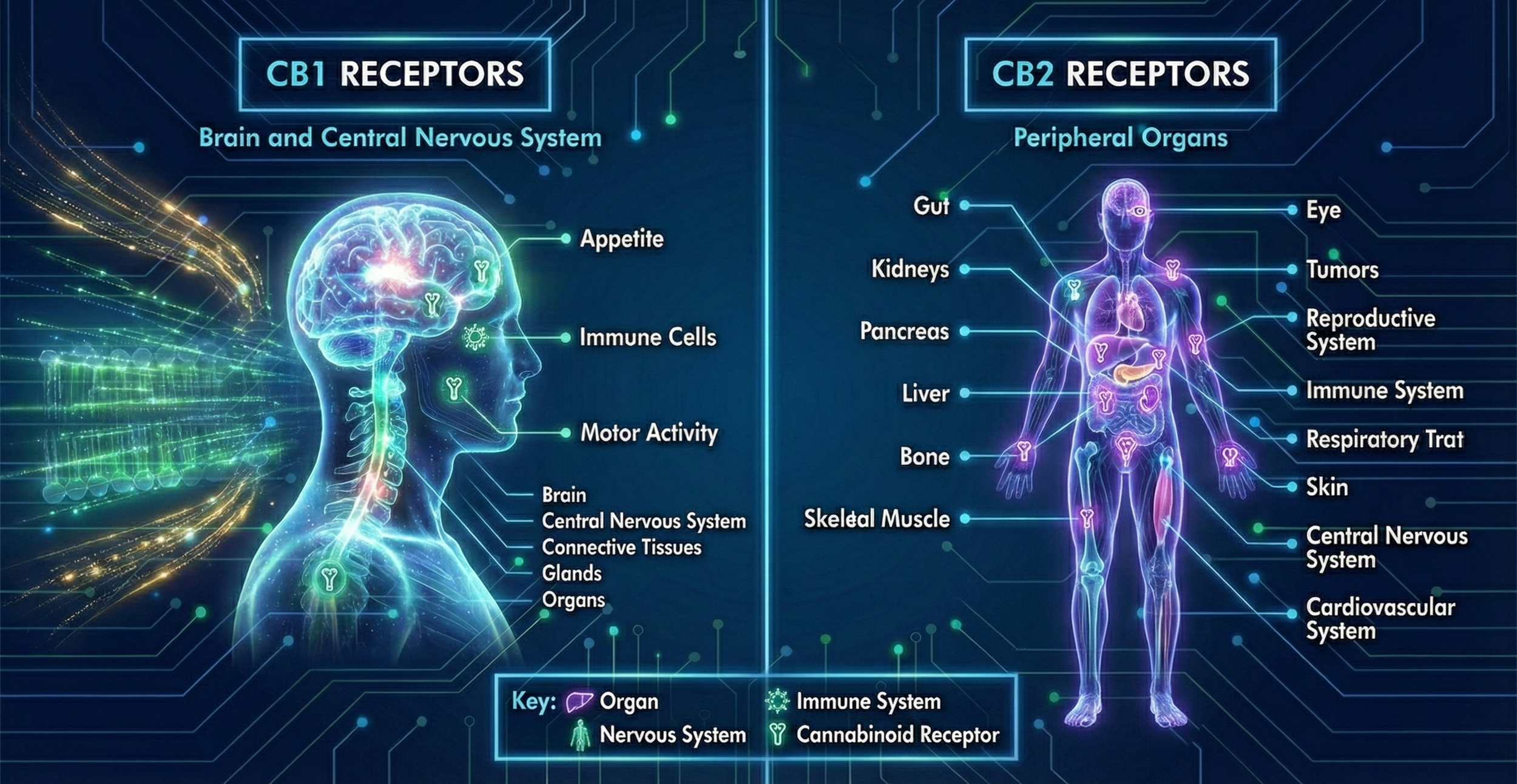
Why do two compounds from the same plant produce such vastly different physiological effects?
The difference between THC and CBD isn't magic; it is mechanics. It comes down to how they interact with the CB1 receptors we discussed in our last post.
The THC Mechanism: The "Direct Agonist" THC is a "structural mimic" of Anandamide (one of your body's natural cannabinoids). It looks so similar that it fits perfectly into the CB1 receptors in the brain. Because of this shape, it acts as a Direct Agonist. It binds tightly to the receptor and activates it directly, stimulating a potent biological response. It engages the system fully and immediately.
The CBD Mechanism: The "Modulator" CBD functions very differently. It has a low affinity for the main binding site of the CB1 receptor. Instead of activating the receptor directly, it works in two subtle ways:
Allosteric Modulation: It binds to a different part of the receptor. This slightly changes the receptor's shape, which can actually make it harder for other molecules to bind. This is why CBD is often used to "balance out" or dampen the strong effects of other cannabinoids.
Enzyme Inhibition: It slows down the enzymes (like FAAH) that break down your natural Anandamide. This allows the body's own endocannabinoids to stay in the system longer, prolonging their natural balancing effects.
The Bottom Line: THC presses the button directly. CBD prevents the button from being pressed too hard, while helping the body's own internal signals last longer.
Next up: What happens when this system stops working?
Source/Further Reading:
Project CBD / NIH: Distinct molecular targets of CBD – https://pubmed.ncbi.nlm.nih.gov/32615159/